


Description

Students grasp the nuances of diplomacy through this interactive lesson. They are called to decide which diplomacy tools work best in different situations. Students will develop an understanding of negotiation, sanctions, and other elements used in diplomatic relationships.

Objectives

Students will be able to:

  • Define foreign policy
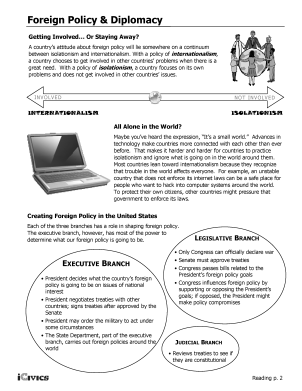
  • Distinguish between isolationism and internationalism
  • Explain the relationship between the national interest and U.S. foreign policy
  • Explain the role of the three branches of government in foreign policy
  • Make judgments about the effectiveness of various diplomatic strategies in a variety of situations
  • Distinguish between aid, sanctions, and military force as foreign policy tools

Lesson Prep

PRINT
Step by Step and Teachers Guides for yourself.
COPY
student materials for the class.

Step by Step

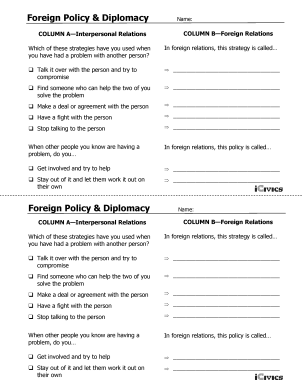
ANTICIPATE by distributing the half-page anticipation activity.  Ask students to fill out only Column A—Interpersonal Relations.  Call on students to share their answers and discuss how effective these different interpersonal strategies are.  Tell students that when countries have problems with each other, they use similar strategies.

DISTRIBUTE one reading page (double-sided) to each student

READ the reading page with the class

REVIEW concepts from the reading by doing the active participation activity with the class

DISTRIBUTE one activity manipulative to each student

EXPLAIN that you will be reading several scenarios together as a class and that you will be asking the students to make decisions about the scenarios. They will use the activity manipulative to show you what decision they make.

READ the words and definitions on each side of the activity tool with the class.  Point out that one side is Diplomatic Strategies and the other side is Take Action.

READ the “Thousands Starving in Isolatia!” scenario with the class using either overhead transparencies you made from the transparency masters.  Read and explain the hypothetical U.S. foreign policies.

UNCOVER the News Flashes one at a time.  Read the news flash and ask students to show you their answers (opinions) by holding up their manipulative so the answer they choose is pointing up.  Students will probably have a variety of answers.  Ask students to explain their choices and use this to discuss the possible effects of the different choices, as well as what the most appropriate actions might be.

REPEAT this activity with the second scenario, “Smalland Under Attack!”

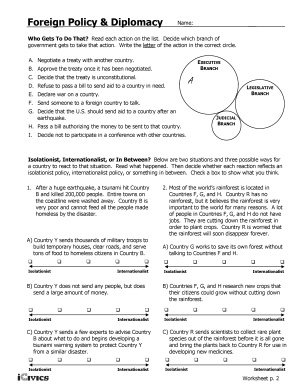
DISTRIBUTE one worksheet to each student.

ASSIGN the worksheet to reinforce the concepts from the lesson.

CLOSE by having students use what they have learned in the lesson to fill out Column B—Foreign Relations on the half-sheet anticipation page.


Recommended Sequence

Teacher Files:

There are no teacher files for this page.