


The role of interest groups in politics and government is a hot topic in the media today. This lesson uses the battle over school lunch ingredients to illustrate how interest groups and lobbying affect public policy. Take a side in the battle, create an interest group, and try to influence public policy.
Students will be able to:
ANTICIPATE by asking students the following questions: Who decides what is offered in the school cafeteria? Are there any rules about what is served in the cafeteria? Who might care about what students eat every day? Why are they interested?
DISTRIBUTE one reading and activity packet to each student.
READ page one of the reading with the class, stopping to discuss both sides of the potato debate as needed.
ASK students to think of one or two effects the regulation would create for each group and discuss responses with the class.
READ the first two paragraphs and table on reading page two with the class.
DISPLAY the transparency and read each organization’s mission statement, pausing for the class to select which type of interest group would best describe each example. Follow up by asking where the Center of Science in the Public Interest and The National Potato Council would fit. (Public Interest and Economic Interest, respectively)
READ through the rest of page two and have the students complete the activity on the bottom of the page and check for understanding.
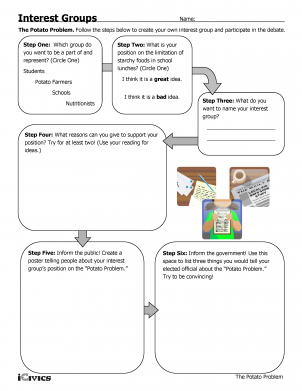
LEAD students through the steps of the Potato Problem activity page. Allow class time for students to complete all six steps (10-15 minutes).
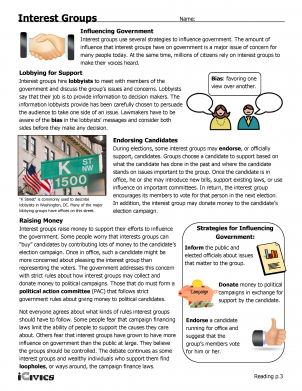
READ page three as a class, clarifying terms or ideas as needed.
DISTRIBUTE Who’s Interested to the class and review the instructions. Allow a few minutes for students to complete the matching, and check for correct answers. Ask the students to think about how these groups achieved these actions. (Gaining public support, lobbying representatives in government, and any combination of the inform/endorse/ donate/ influence activities.)
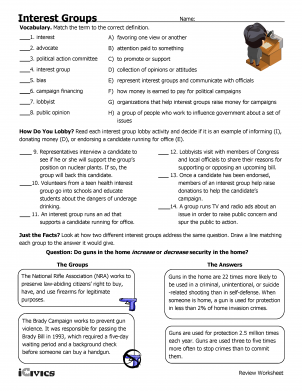
ASSIGN the review worksheet.
CLOSE by asking students to check their work on the review sheet with a partner. Answer any questions remaining.