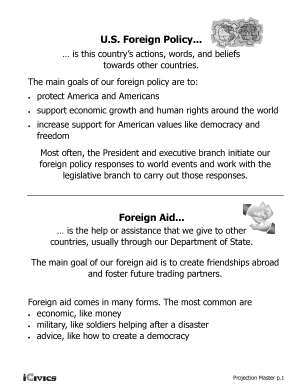



Students learn what foreign policy means. First, they learn the distinction between foreign and domestic policy. Then they find out what role the executive branch plays in foreign policy and the primary tools it uses: foreign aid, the military, and treaties. In addition, students learn how foreign policy power is shared with the legislative branch.
The student will...
DISTRIBUTE one “War & Peace and Everything In-between” packet to each student.
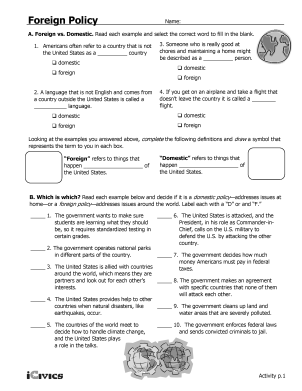
ANTICIPATE by having students complete the sentences and review the difference between the terms "foreign" and "domestic."
TELL students to answer questions 1-10 on worksheet p1 distinguishing between foreign and domestic policy and review the answers as a class.
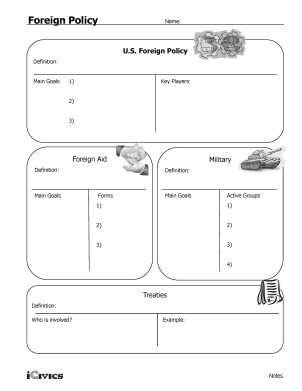
TEACH students about foreign policy and its primary tools (foreign aid, the military, and treaties) using the overhead transparencies. Tell students to take notes in the appropriate boxes on worksheet p2.
EMPHASIZE the leading role the President and executive branch have in developing and carrying out foreign policy.
DISTRIBUTE voting cards to the class.
READ each of the scenarios listed on the Active Participation Activity guide. After each, have student vote by holding up the correct side of their tri-fold voting card.
TRANSITION to worksheet p3 and how the Constitution divides power among the executive and legislative branches.
TELL students to reread their cards and notes and match each power with the correct topic and branch of government to complete the chart.
REVIEW the correct answers.
CLOSE with student responses to the final question on the page regarding why the Framers gave Congress a voice in most foreign policy decisions when they wrote the Constitution.