


The Electoral Process Print All Related Standards

Description

Take a peek into the electoral process- from party primaries to the general election. Students will learn the distinctions between the popular vote and the Electoral College, and exercise their critical reasoning skills to analyze the differences between the presidential and congressional elections. Students will also contrast the various nomination processes and learn about the role of party conventions in American politics.

Objectives

Students will be able to:

  • describe the electoral process in primary and general elections.
  • compare the popular vote with the Electoral College as a means to elect government officials.
  • explain how a candidate can be elected without receiving the majority of the popular vote.
  • contrast primaries and caucuses as ways to nominate someone within a political party.
  • explain the role of local, state and national conventions in political parties.
  • identify key dates for national elections.

Lesson Prep

PRINT
all student and teacher materials.

Step by Step

DISTRIBUTE reading pages (double-sided ok) to the students.

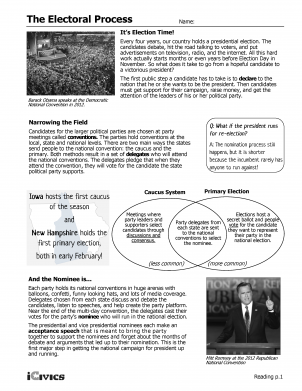
READ page one with the class.

ASK students to brainstorm the kind of statements a nominee might make in an acceptance speech.

READ page two with the class. (If you have access to any printed campaign materials or political ads, share them with the class.)

IDENTIFY the number of electors your state has by working through the math example on page 2.

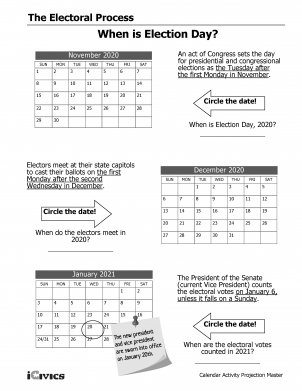
DISTRIBUTE the Calendar Activity.

COMPLETE the activity with the class. Check for correct dates.

DISTRIBUTE the review activity page and complete as a class.

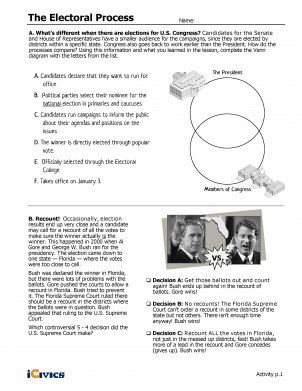
INTRODUCE and distribute the two activity pages to the class.

READ and complete each section and discuss.

Recommended Sequence

Teacher Files:

There are no teacher files for this page.